My Roots: Spivak Family History tells the story of my family history five generations back.
Process, research, intuition.
This ceramic vessel series marks a pivotal moment in my development as an artist, revealing how central process, research, and intuition are to my practice. Created for my final drawing course at community college, the project began with a desire to explore narrative through form, drawing inspiration from ancient Greek pottery; objects that functioned not only as utilitarian forms but as enduring records of history, daily life, and collective memory. A personal way to set my history into stone.
Something that has always stood out to me about Greek ceramics is their role as vessels of documentation. This idea led me inward. I have always been deeply aware of my family history and the depth of my ancestral connections, and have always been compelled to engage with it more deliberately. I emerged with a realization: I had access to a rich archive of stories, photographs, and documents that could be translated into visual form. This series became a way of preserving, interpreting, and materially grounding that history.
Part One: Great-great Grandparents
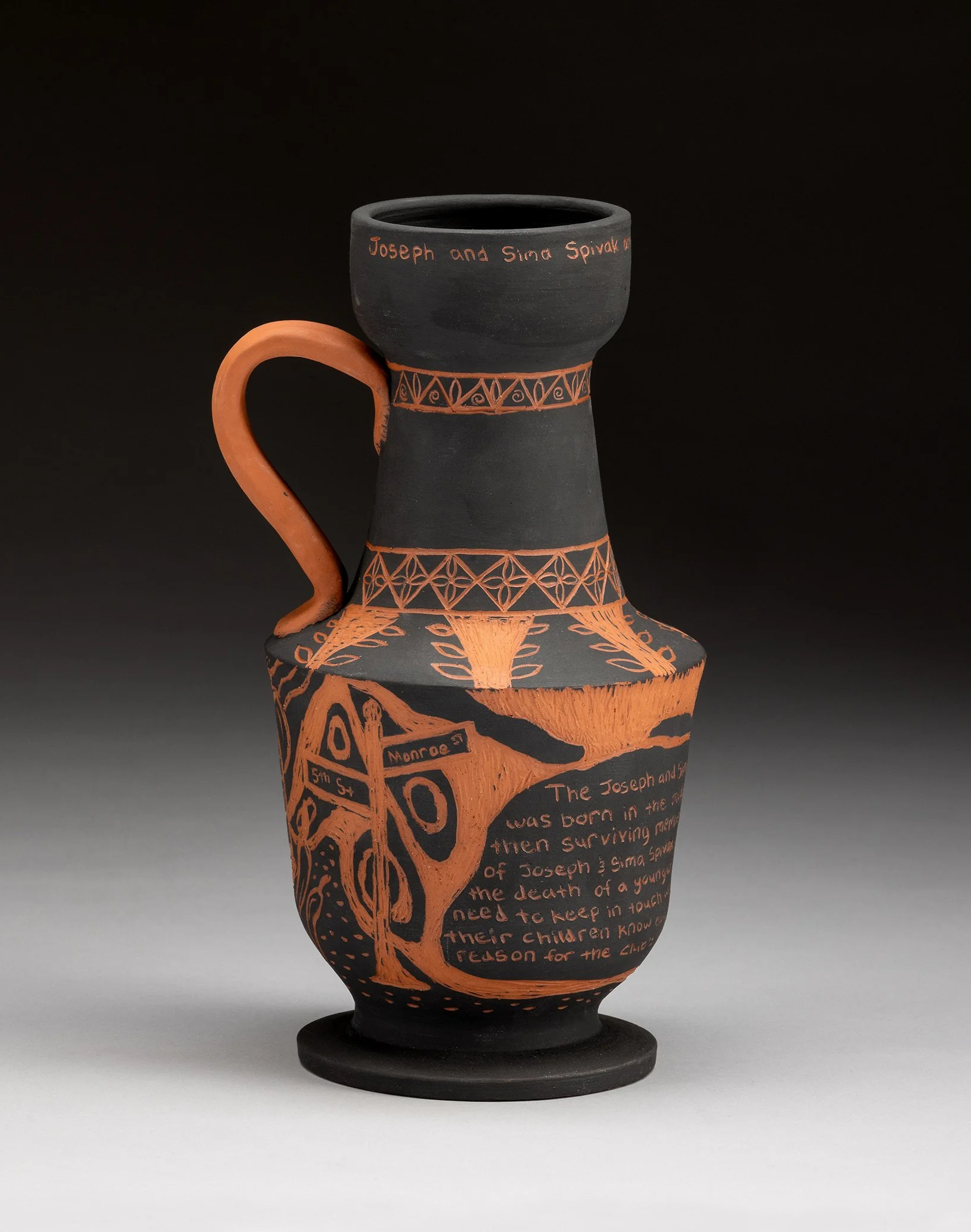
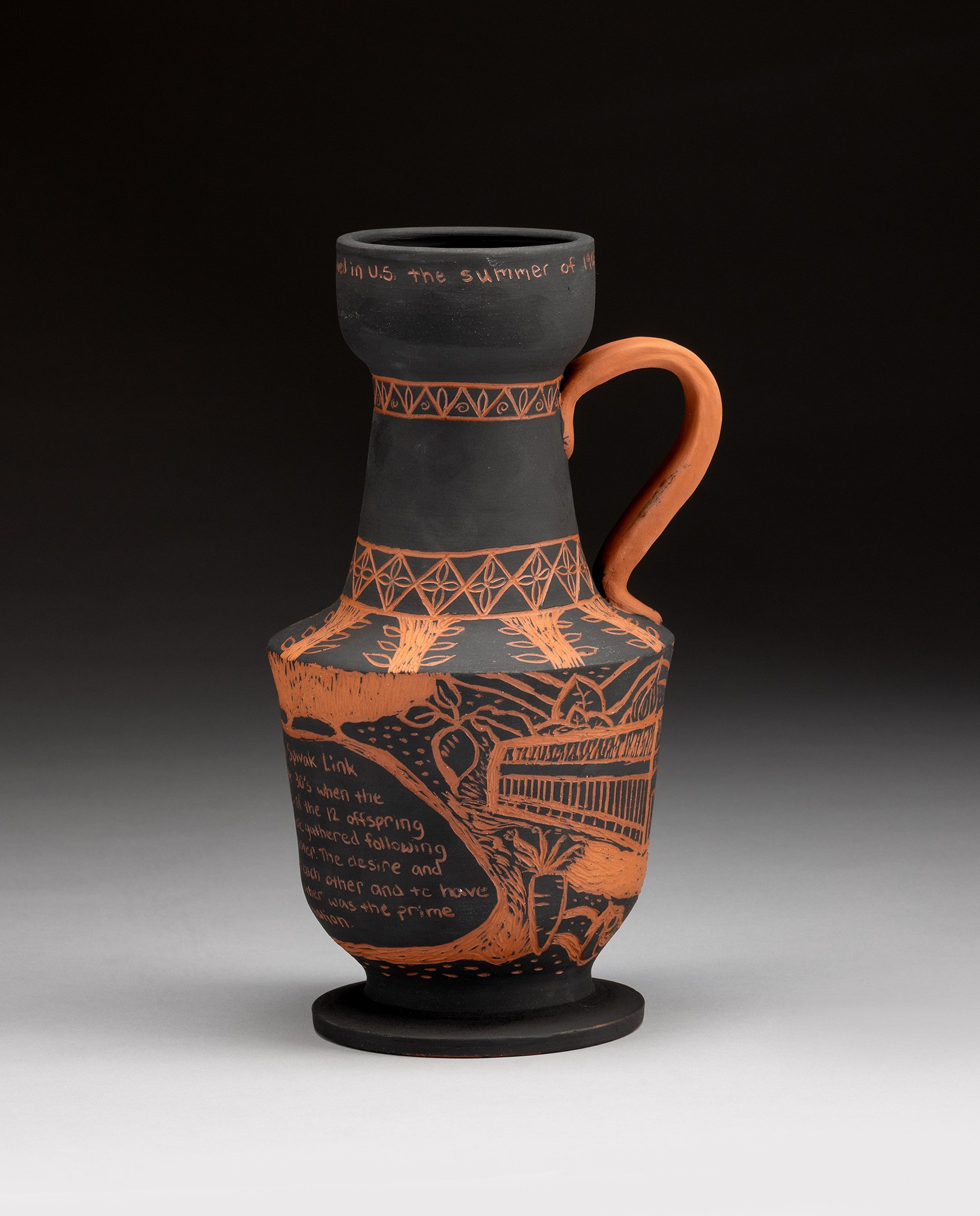
The first vessel focuses on my great-great-grandparents, Joseph and Sima Spivak. They immigrated to Philadelphia from Russia in the summer of 1905. This vessel incorporates imagery of their small South Philly grocery store, the location of their first home in Philadelphia, traditional Russian folk patterning, and a written excerpt from a document. This excerpt details the monthly family meetings held among their twelve children (well, eleven, since one passed). The inspiration for these meetings stemmed from the siblings starting to sprawl through the Philadelphia region, and a strong desire to make sure their children still knew each other. Each month, the family would gather at the selected meeting place, go around the table to talk about the happenings in each person’s life, and the family member who was elected secretary would write all of this information down in what is known in my family as “The Minutes.” We still have these handwritten documents to this day.
Excerpts on Vessel One
The Joseph and Sima Spivak Link was born in the middle 30's when the then surviving members of the 12 offspring of Joseph and Sima Spivak were gathered following the death of a younger sister. The desire and need to keep in touch with each other and to have their children know each other was the prime reason for the club's formation.
Family members were moving out of the city in all directions and there no longer was daily contact except through Buba (Sima) who knew where all of her children were most of the time. (Currently we number 166 living family members and are into the sixth generation.)
This was written on December 6th, 1982.
Jos & Sima Spivak arrived in U.S. the summer of 1905 with: Abe age 13, Mary 11, Sarah 9, Max 7, Ida 5, Harry 3. They came from Schurdisnek, Russia.
Sofia’s note: I have yet to find any information about this place in Russia. I believe it must have been a small village that went under the radar due to war.
Part Two: Great Grandparents
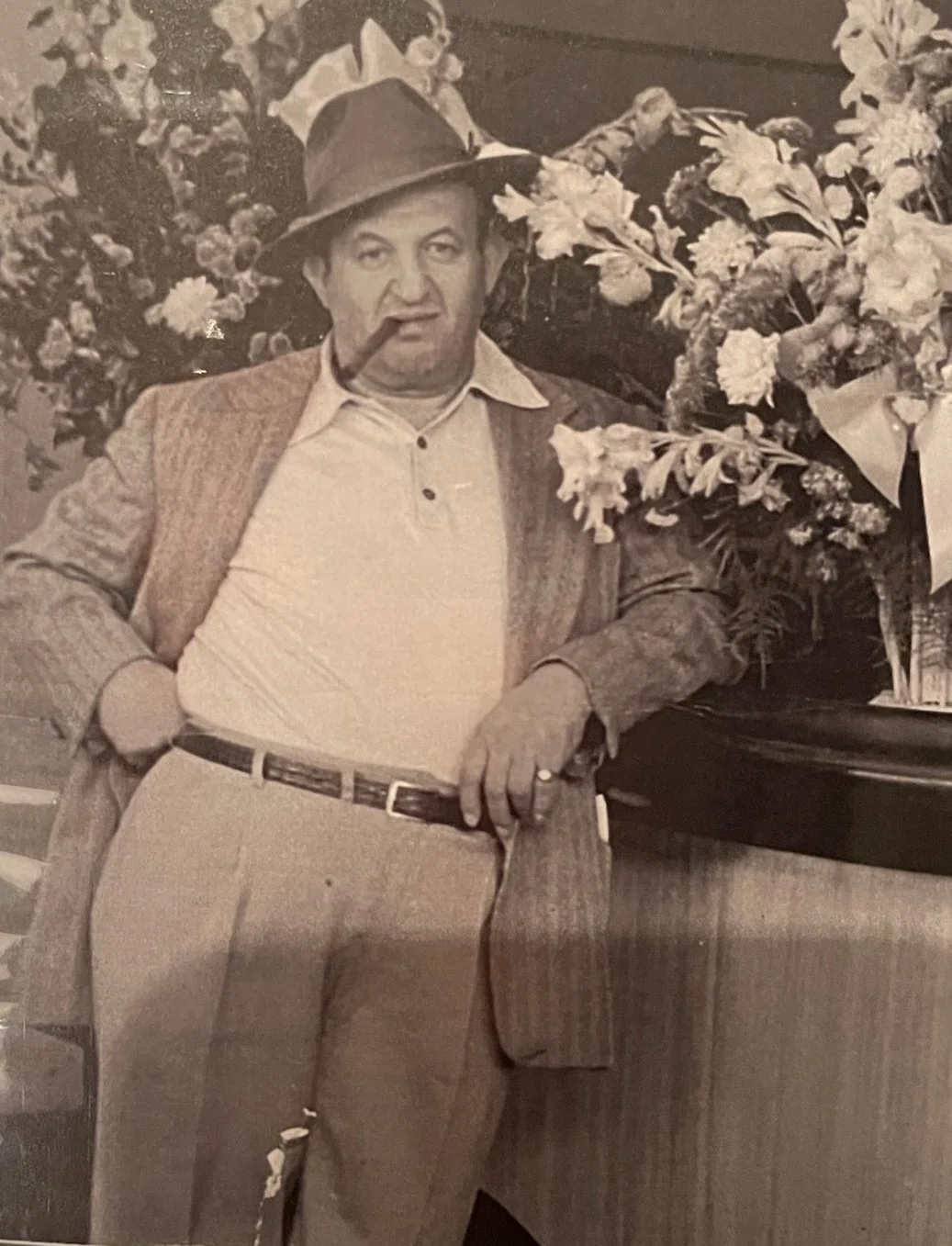
Harry “Speedie” Spivak
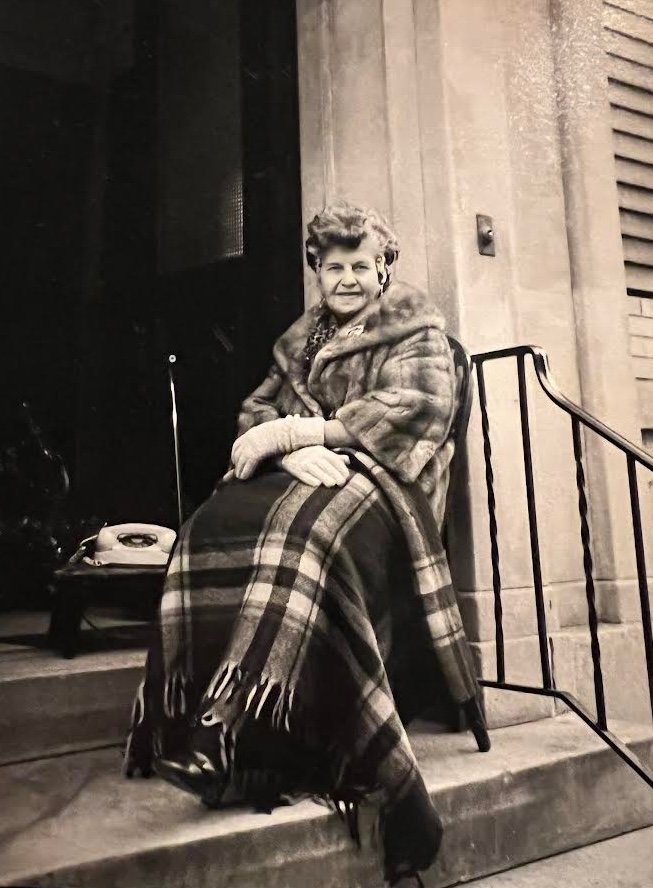
Sadie Gold
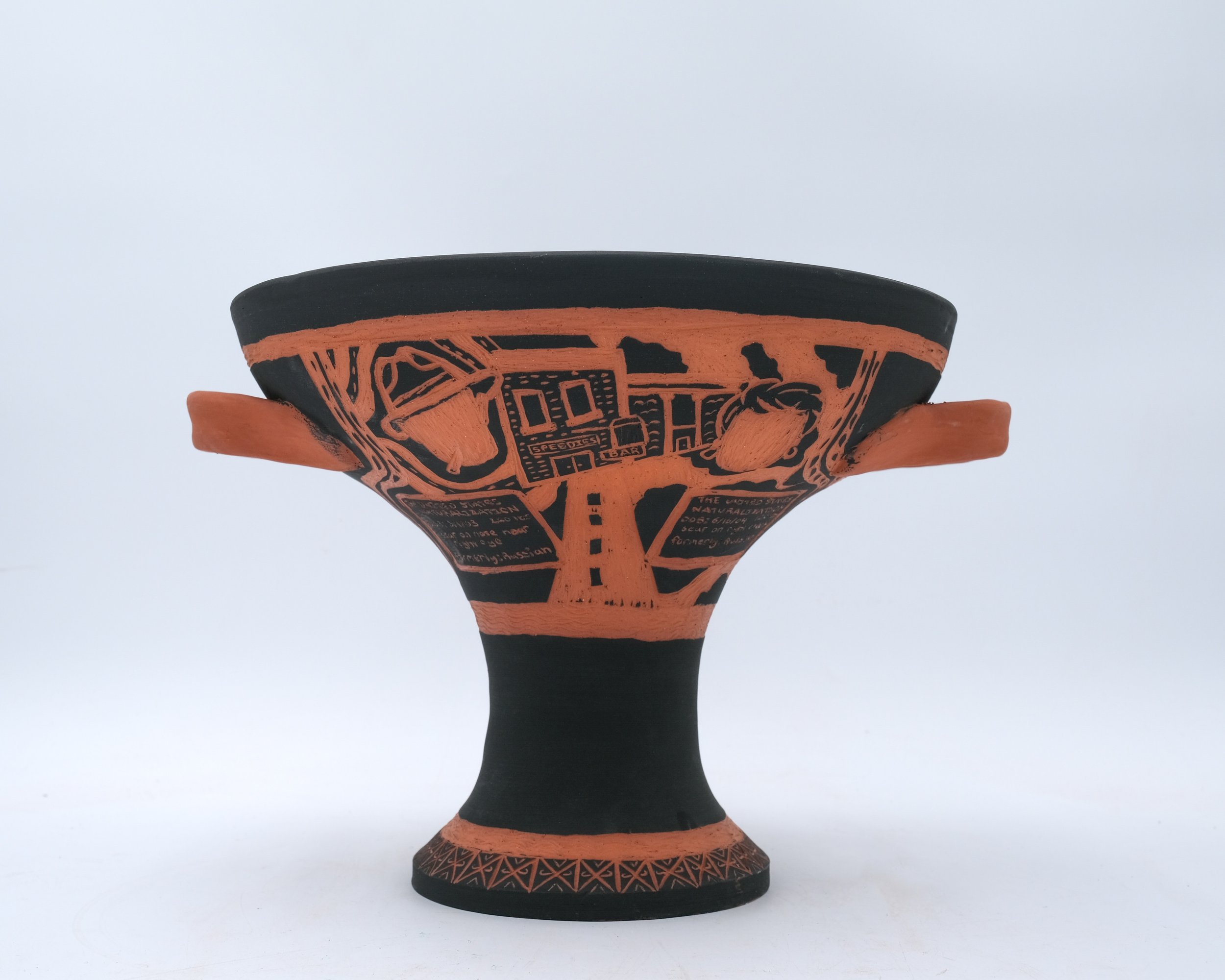
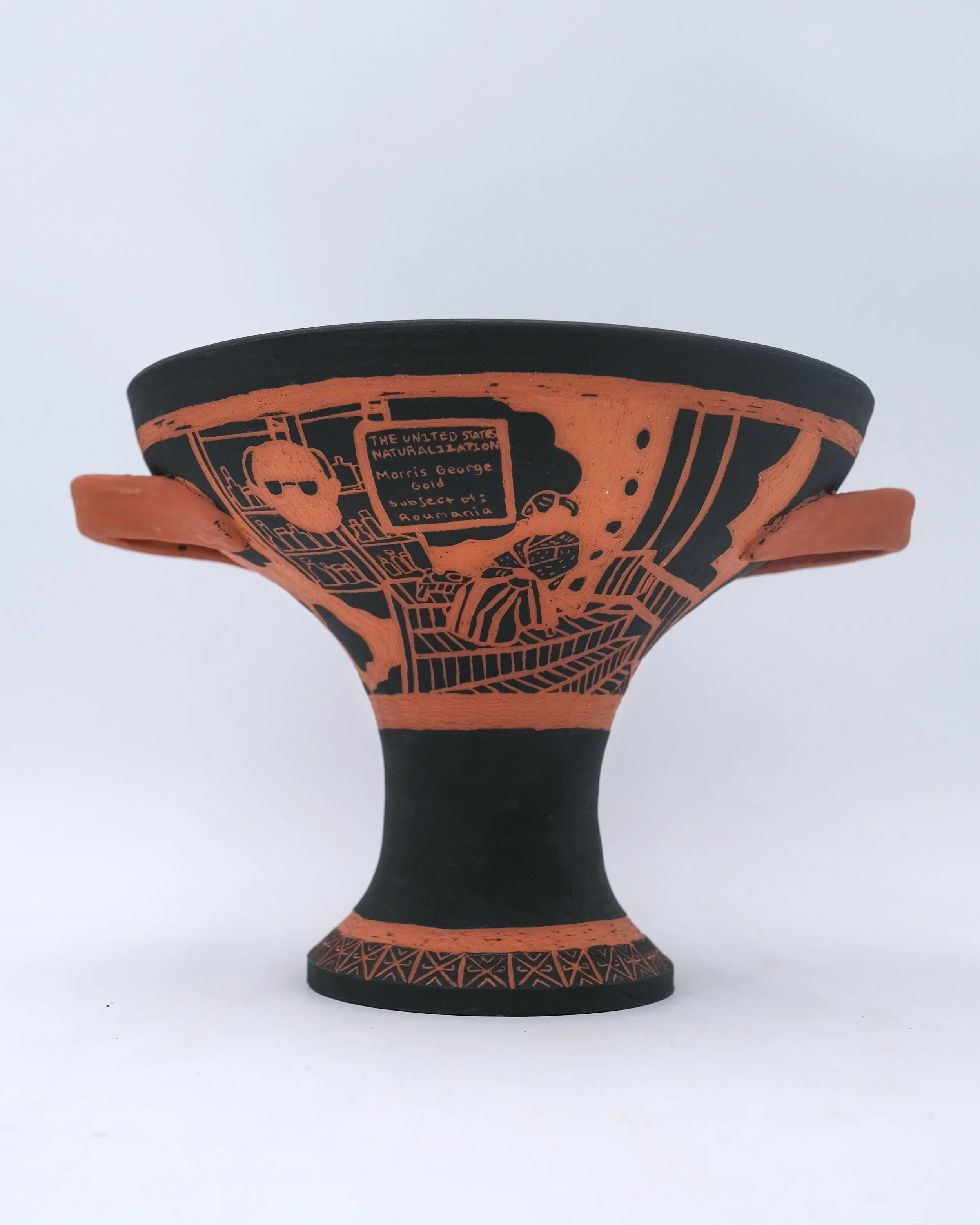
The second vessel expands to both sets of my great-grandparents, juxtaposing contrasting lives—one shaped by involvement in Philadelphia’s Jewish mob and bootlegging culture, the other grounded in the steady profession of pharmacy.
The first side pictured shows portraits of my grandfather’s parents, Harry (Speedie) Spivak and Bess Spivak. Harry belonged to the Jewish mob, and he ran many bars, motels, and other quite shady business endeavors. He is always pictured with a giant cigar in his mouth, and often a fedora. A bar sits between their portraits, specifically one off of South Street, where Speedie owned three. Under both Bess and Harry are their naturalization certificates, including their “distinctive marks.” Harry’s: “scar on nose and near right eye” and Bess’s: “scar on right cheek.”
The other side is Morris and Sadie Gold, my grandmother’s parents. While Harry and Bess were from Russia, Morris was born in Romania. He was a pharmacist, which is why an old school pharmacy is pictured behind his portrait, along with his naturalization certificate next to him. The portrait of Sadie shows her sitting at the top of her steps at Chestnut & 20th. Sadie had “manic depressive disorder,” which is what they called bipolar in her time. At the time, the only medication prescribed for this was Lithium. However, Sadie was allergic. She lived her life unmedicated. One story my mom always told me growing up was her setup at the top of her steps. She would take out a chair, a table with her telephone, curlers in, fur coat and gloves on, and often some snacks like her deviled eggs, and sit out on her stoop to talk to people as they walked by. We are so lucky to have a photo of this incredible scene.
Part Three: Grandparents
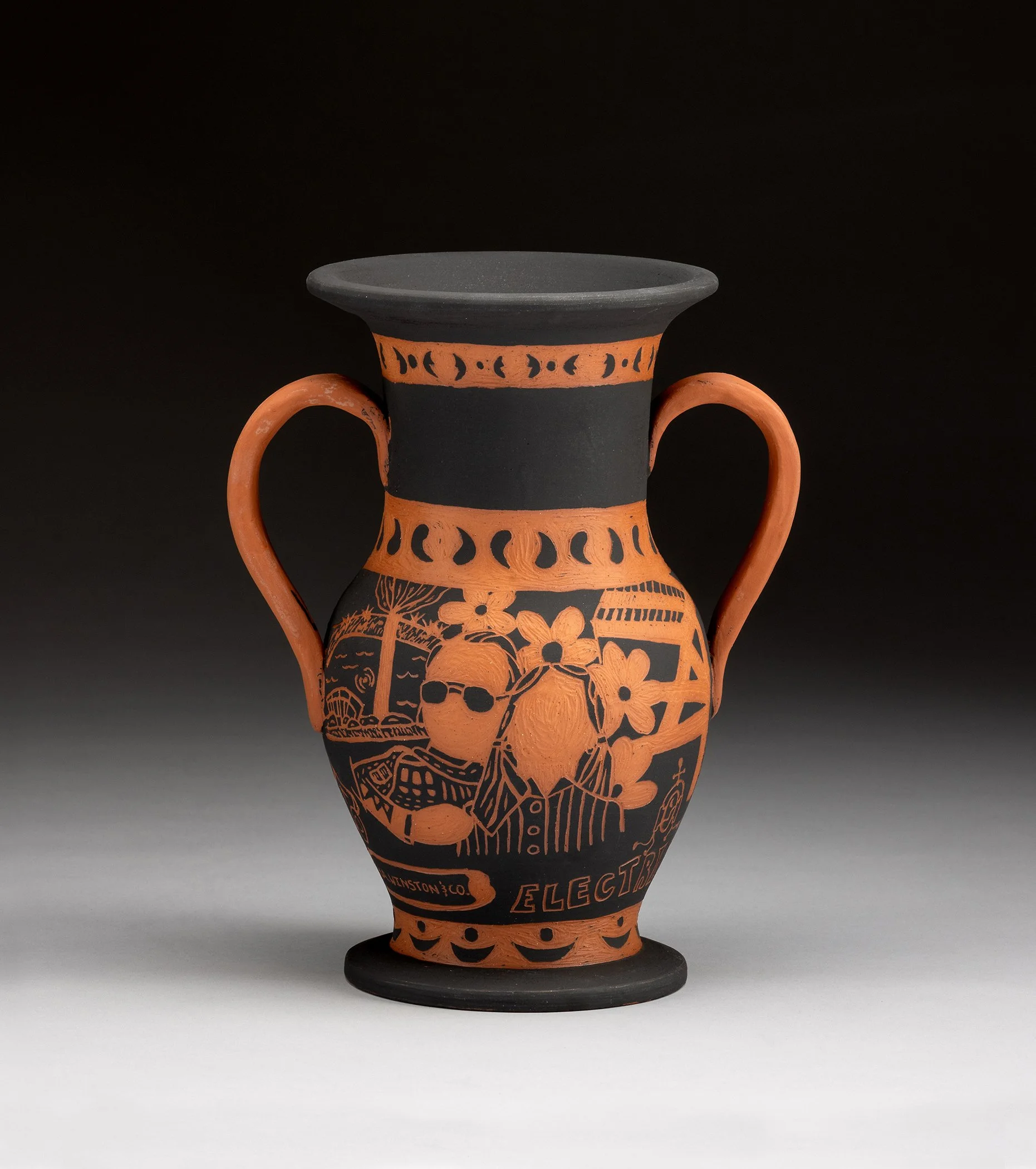
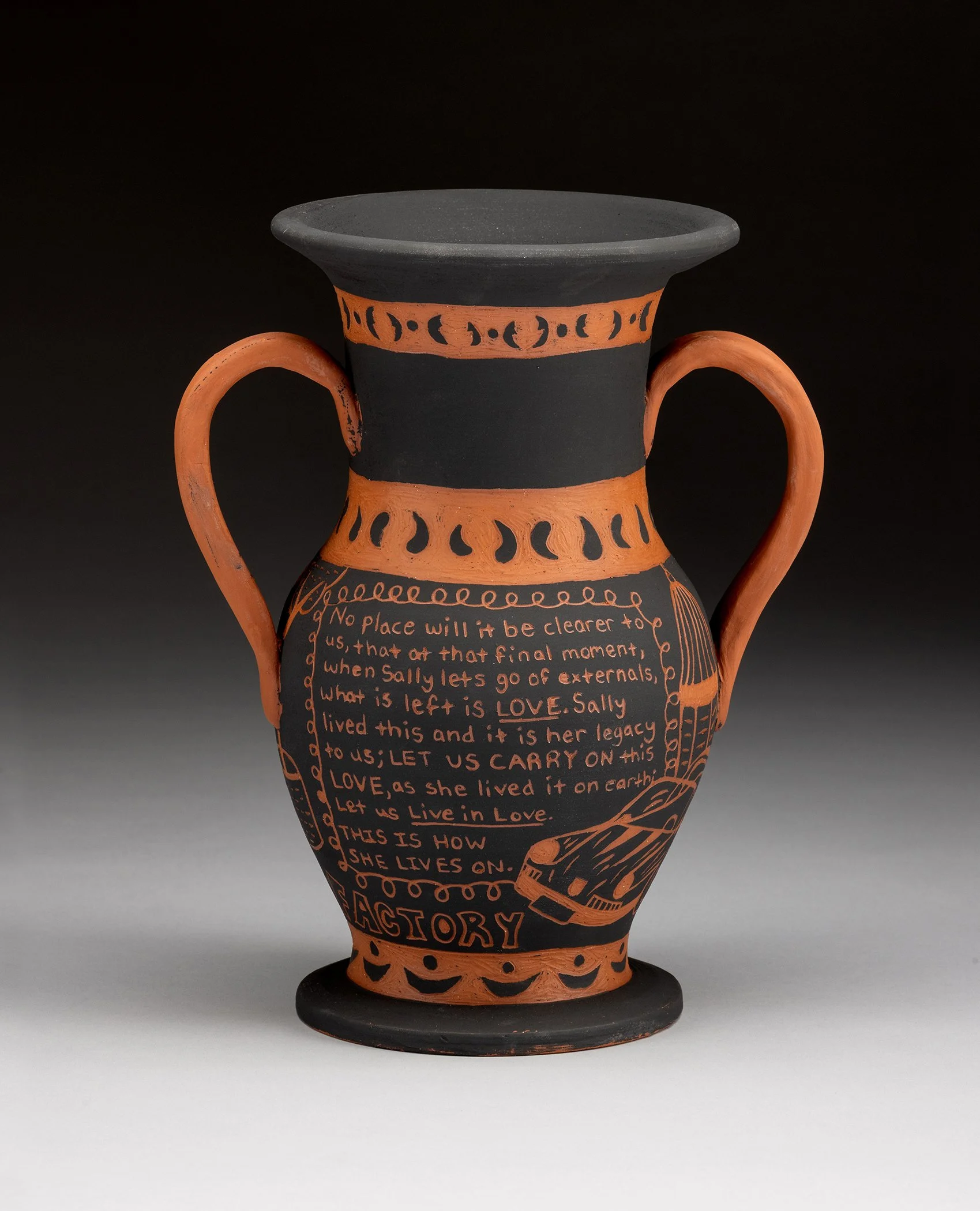
The third vessel reflects on my grandparents, Jerry and Sally Spivak, whom I never met but came to know very well through stories and images. Their presence is assembled through fragments—visual, material, and symbolic—mirroring the way memory is passed down: incomplete, layered, and reinterpreted over time. Rather than a single narrative, the vessel becomes a constellation of moments, objects, and impressions that together construct their lives.
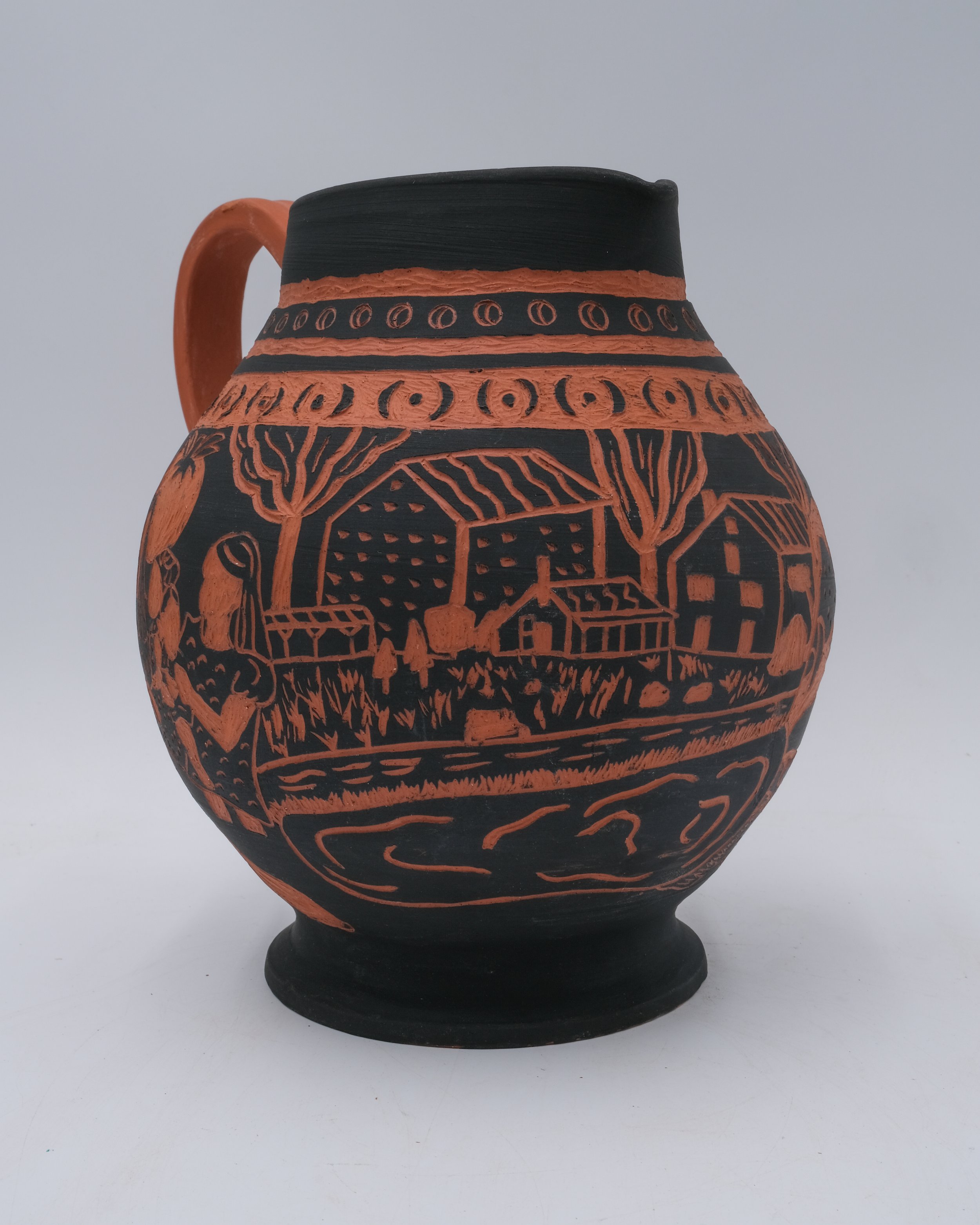
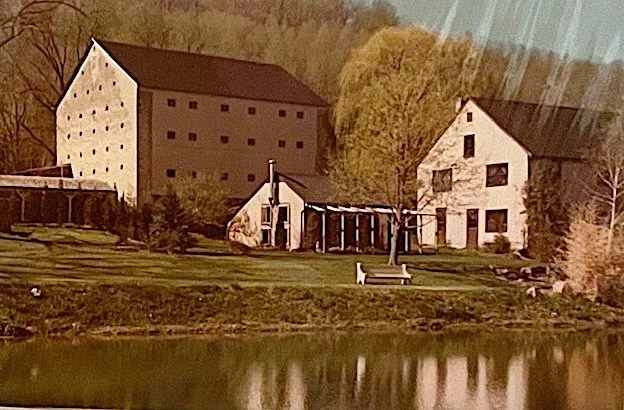
One side centers on an iconic portrait of the two. Surrounding it are scenes and symbols drawn from places they inhabited and shaped: a pond from their property in Bucks County, and architectural elements—beams and a dome—from a house they built in the Berkshires. These references situate them not only as individuals but as makers of environments, people who left tangible imprints on the spaces they occupied.
Personal objects also carry significant weight. An earring that once belonged to my grandmother, now worn as a necklace by my mother and aunt, each holding one. The patterned bands encircling the vessel are derived from fabrics, jewelry, and artworks she collected, attesting to her taste and skills in decorating. On the opposing side, a Porsche stands—a reference to my grandfather’s love of cars.
Their lives extended beyond the domestic into broader cultural and commercial spheres. My grandfather co-founded The Electric Factory with his brothers (and co.), a space that has lived on in family lore through stories my mom and her siblings tell. He was also involved in H.A. Winstons, a restaurant chain that expanded throughout the Philadelphia region and around DelCo. Jerry Spivak was a serious businessman whose work shaped not only his family’s history but also the social landscape around him.
The writing on this vessel comes from my grandmother’s funeral program. Every time I read the program, I am moved to tears, and it only felt right to include this as a token of her life.
This vessel reflects how I have come to understand my grandparents: not through direct experience, but through accumulation, storytelling, and the enduring presence of the objects and places they left behind.
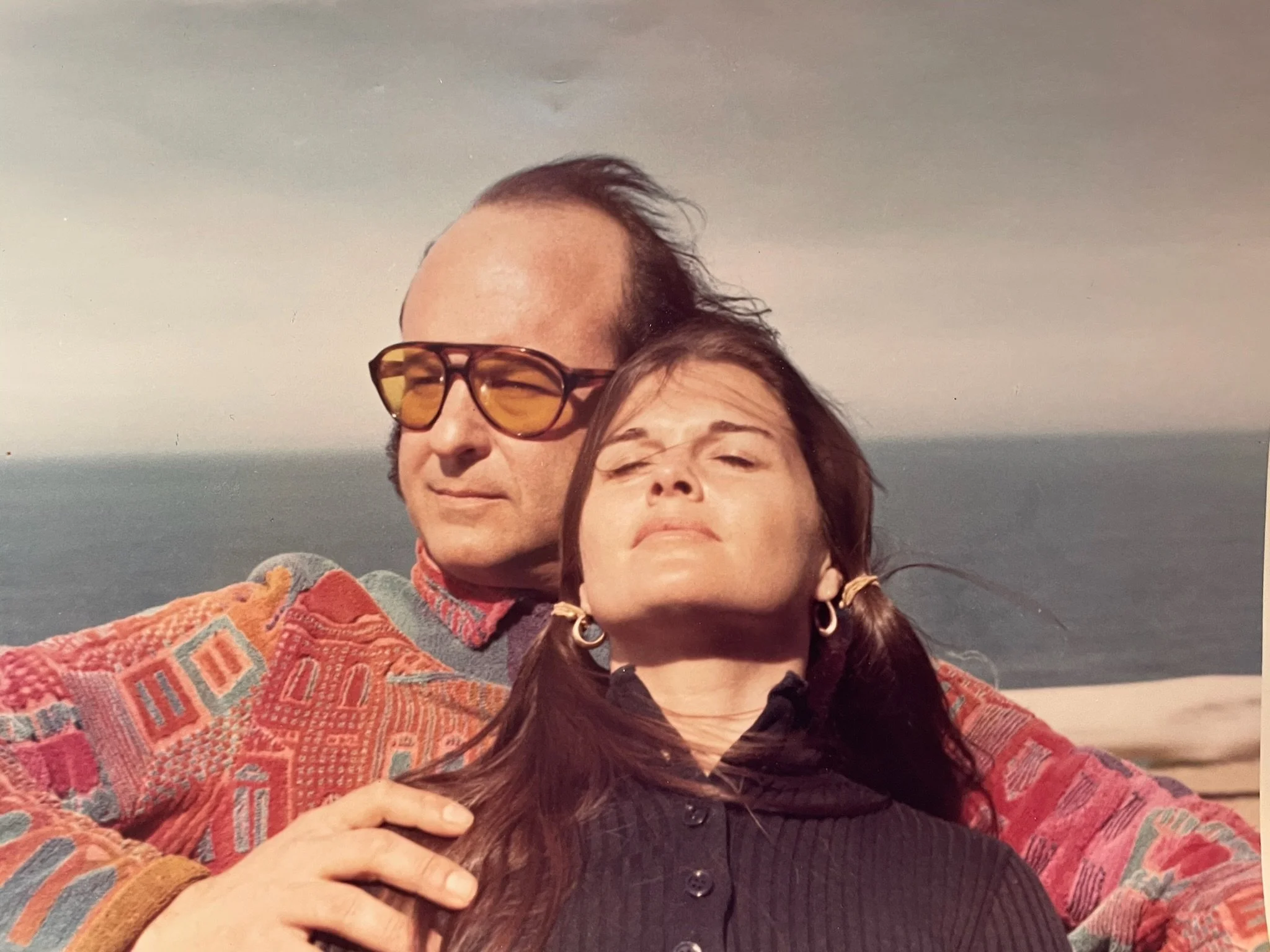
Sally and Jerry Spivak, 1980’s
No place will it be clearer to us, that at that final moment, when Sally lets go of externals, what is left is LOVE. Sally lived this and it is her legacy to us; LET US CARRY ON this LOVE, as she lived it on earth; Let us Live in Love. THIS IS HOW SHE LIVES ON.
Excerpt on Vessel Three
Part Four: Mom & Her Siblings
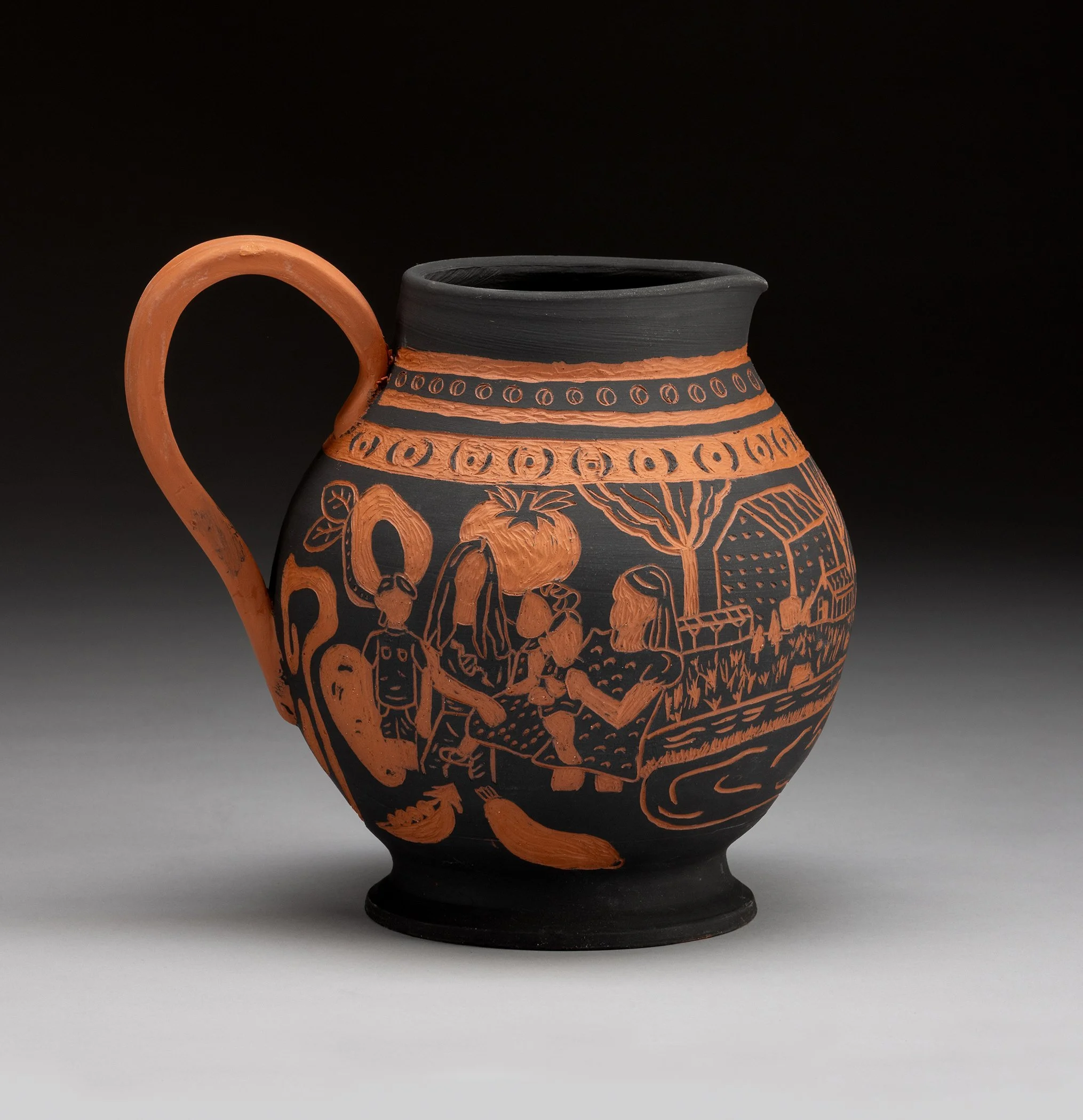
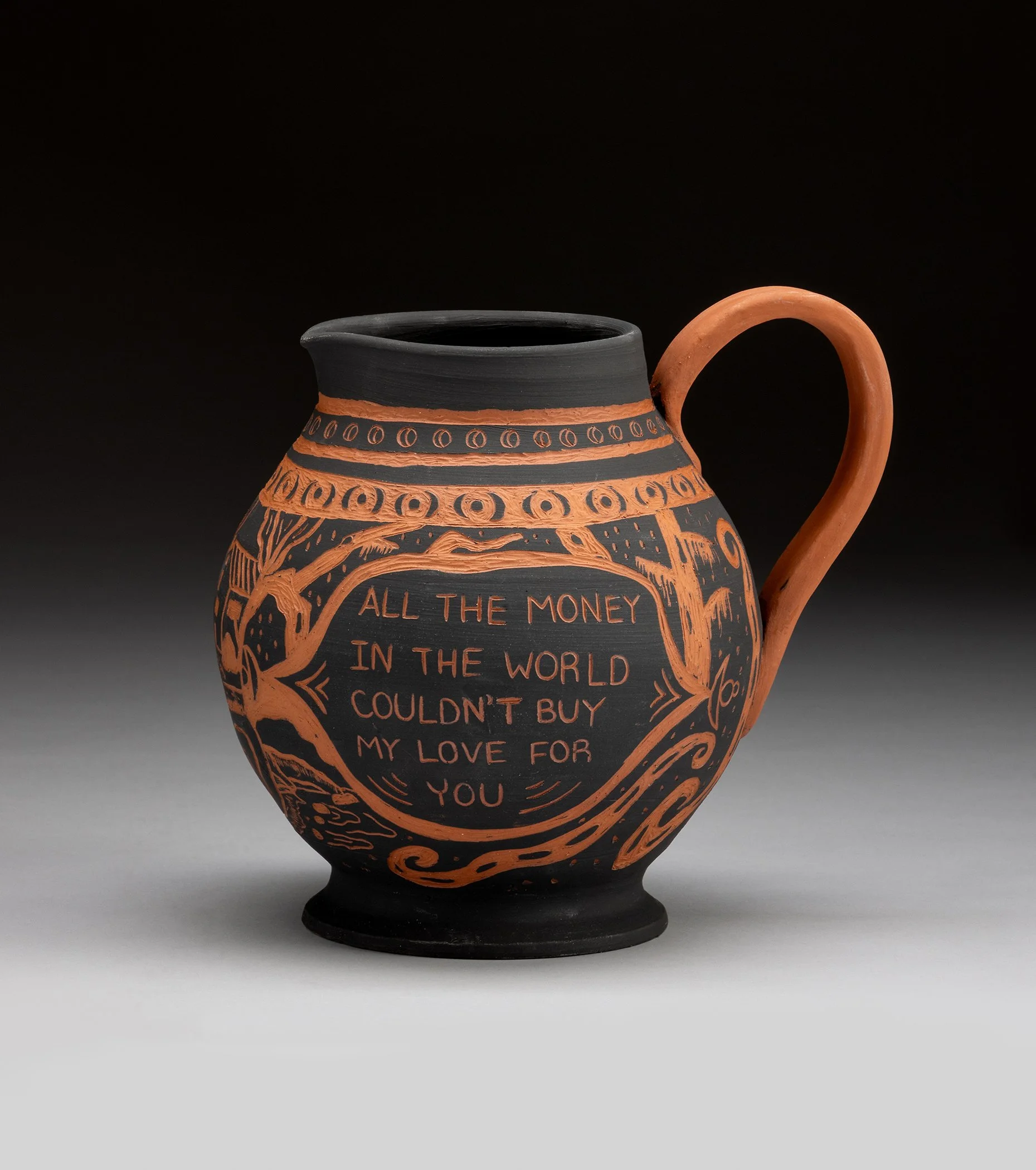
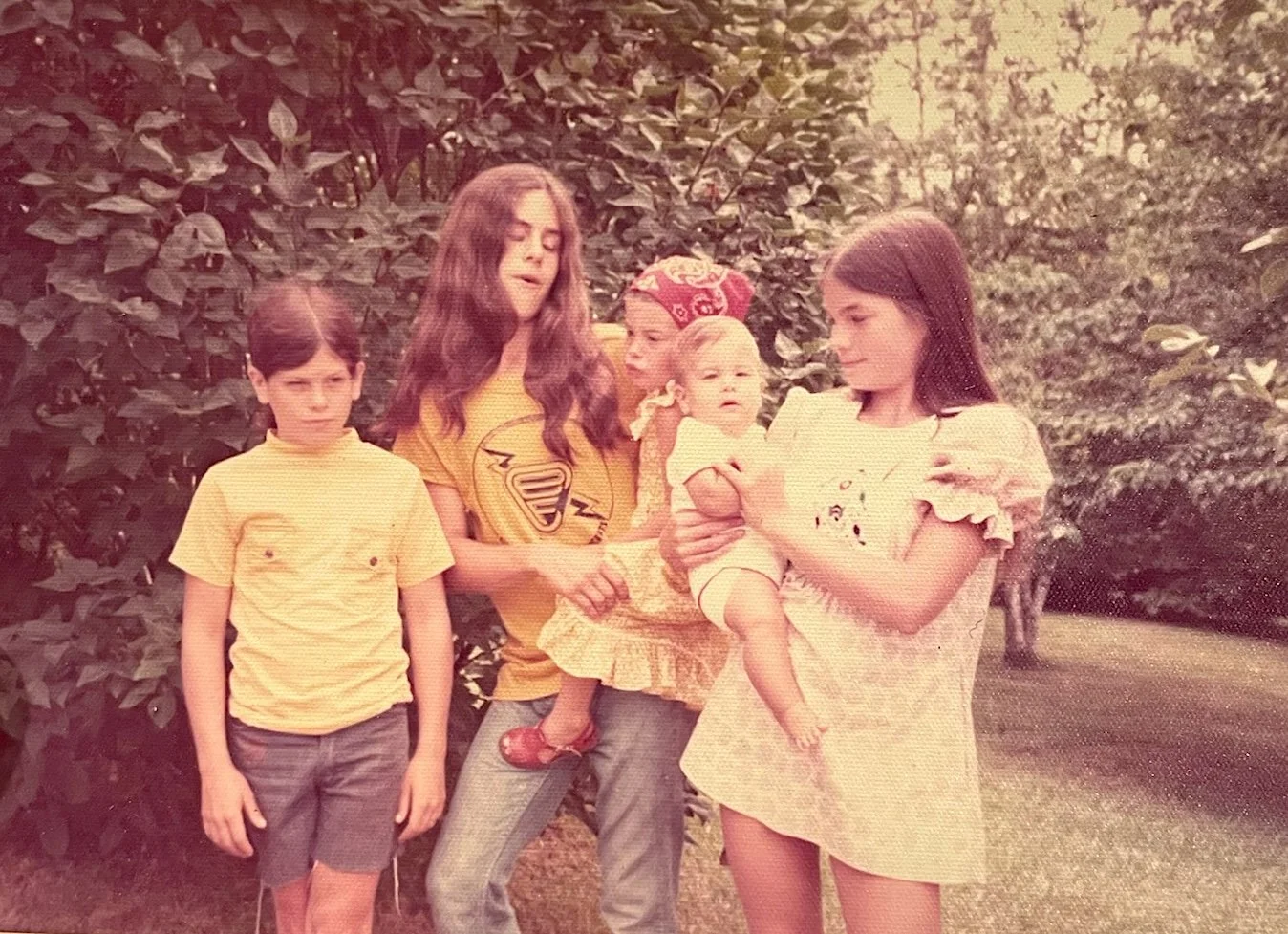
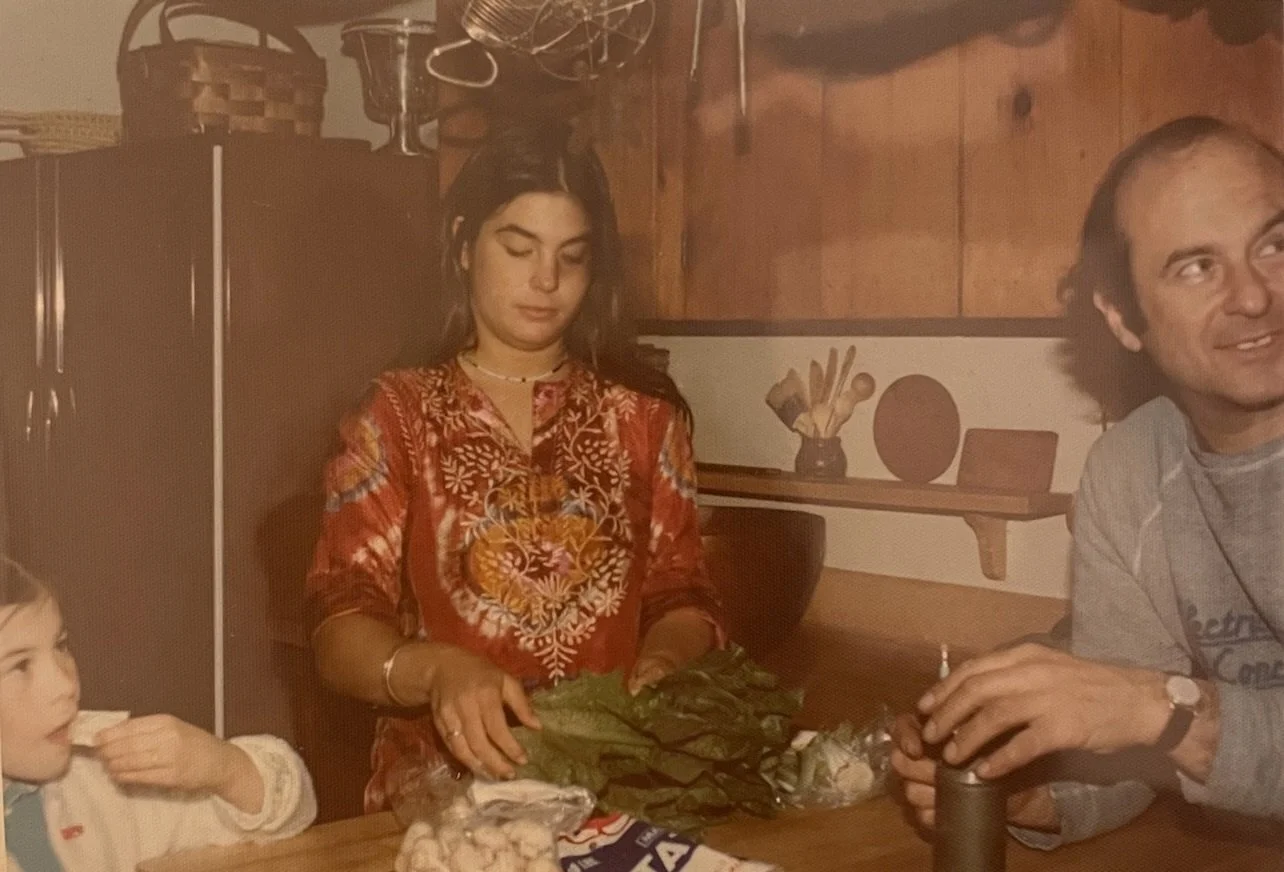
Part four of the series is all about my grandparents’ five children. Here, I bring together imagery inspired by my mother, Jenny, and her four siblings—Harry, Jon, Betsy, and Josh. It features a portrait of them as young children, in their classic hippie attire. Alongside the portrait are images of vegetables that reflect their vegetarian upbringing, and a depiction of the Bucks County property where they once lived. The siblings also spent some time of their life in Northern California, Big Sur area. I included some trees with Spanish Moss hanging from the branches, which is seen all over the area, and a small image of a cove. The piece also includes a quote: “All the money in the world couldn’t buy my love for you,” something my mother often told me, just as her own mother told her.
Part Five: My Cousins and Me
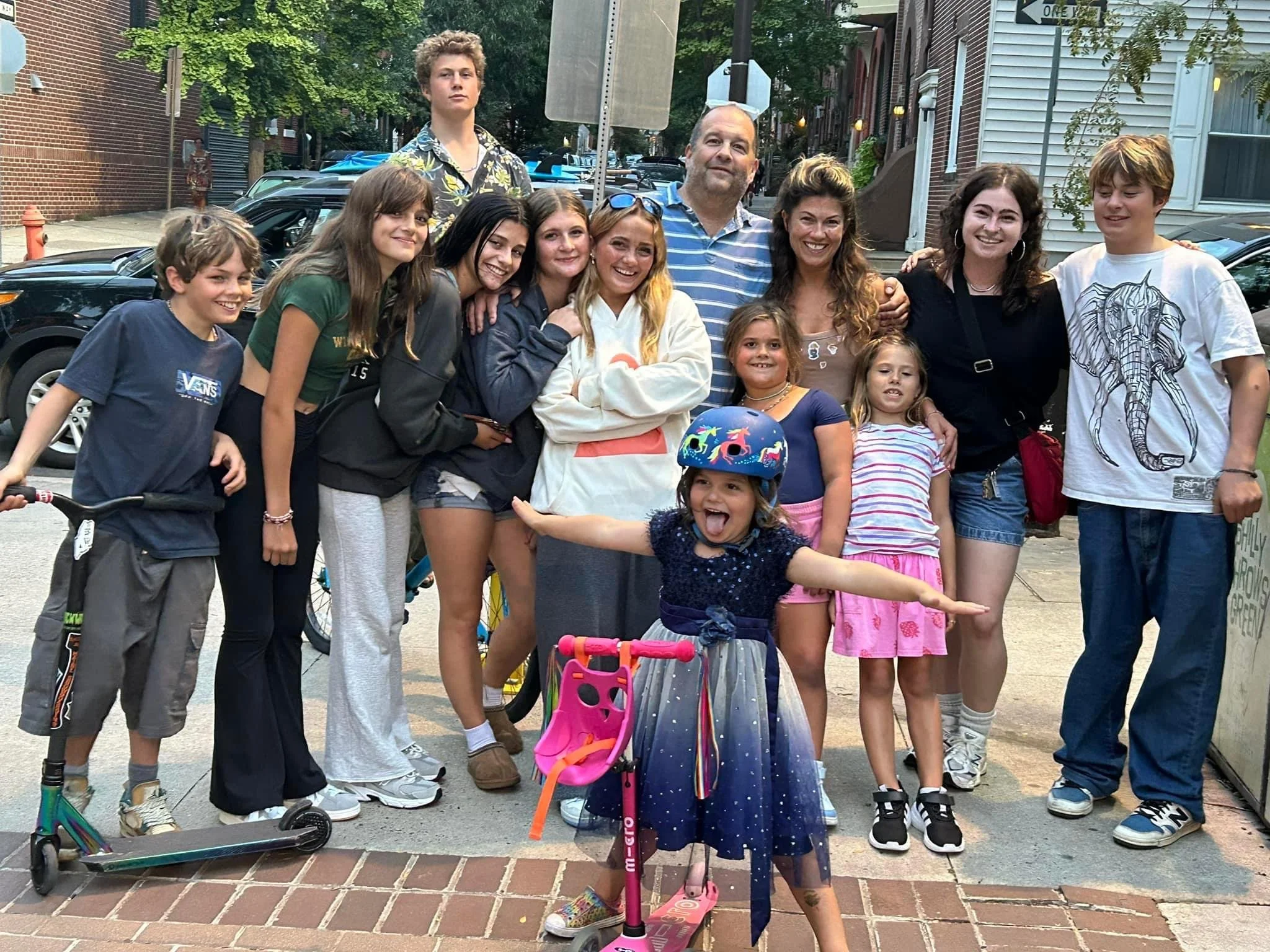
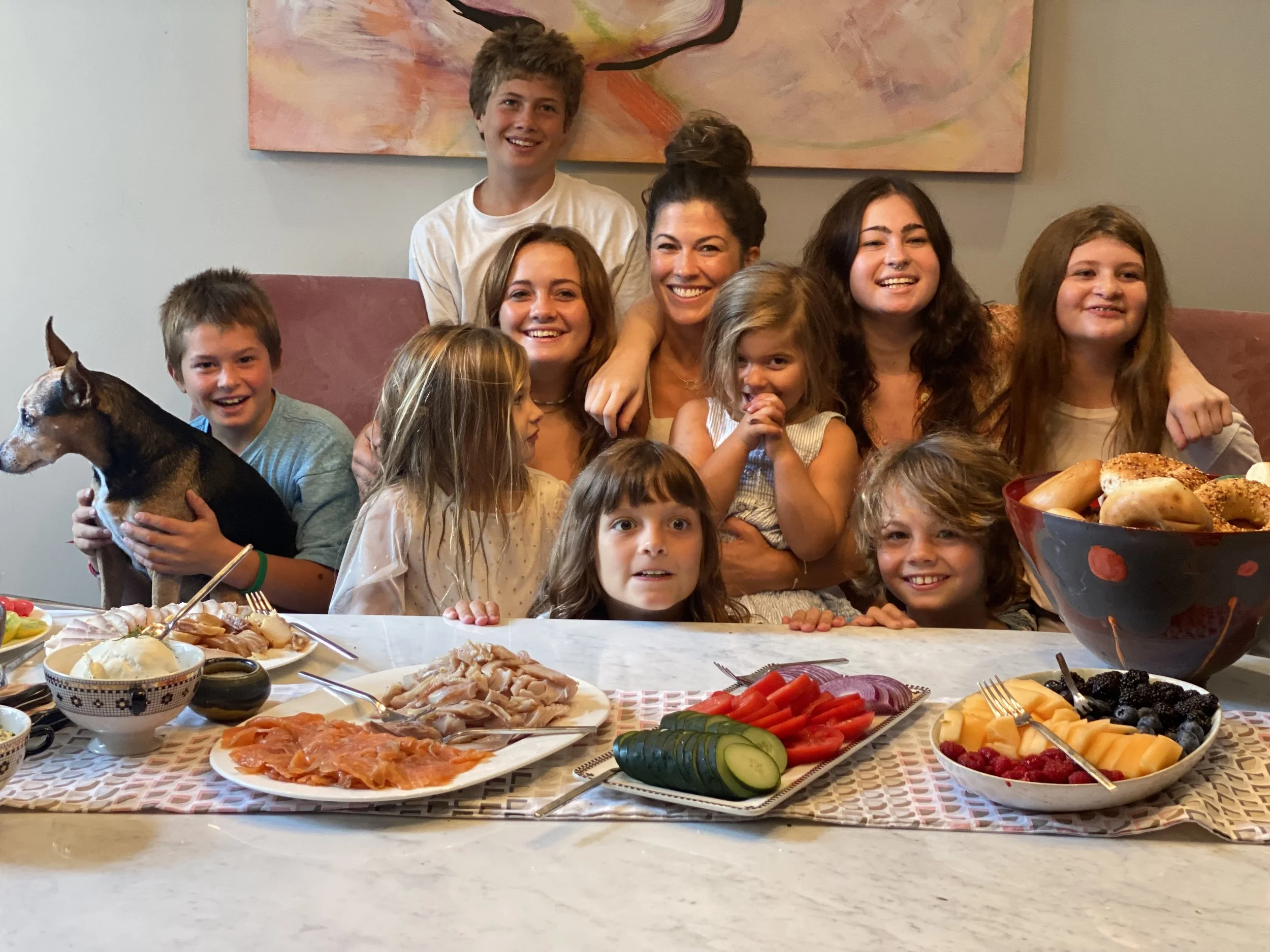
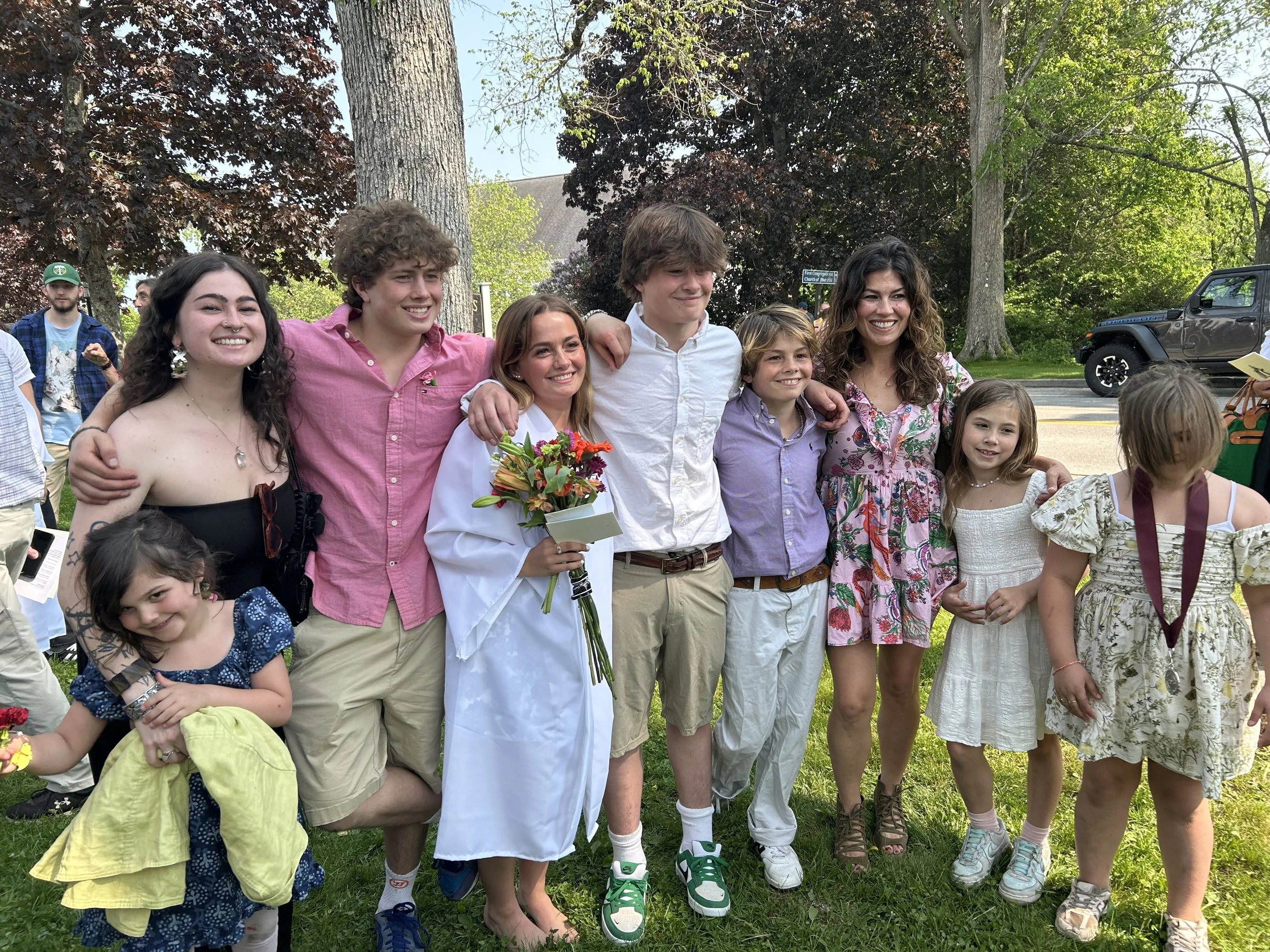
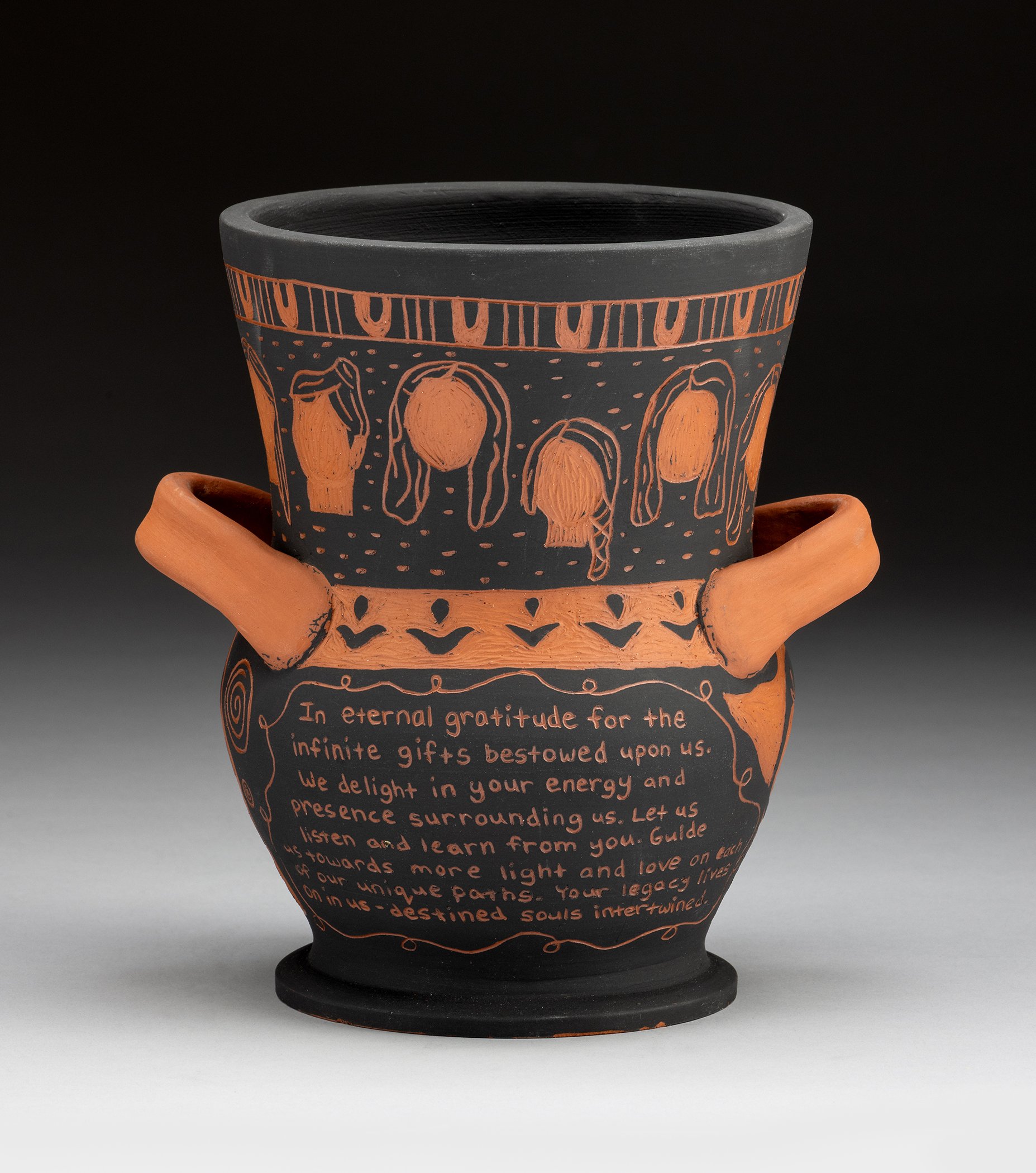
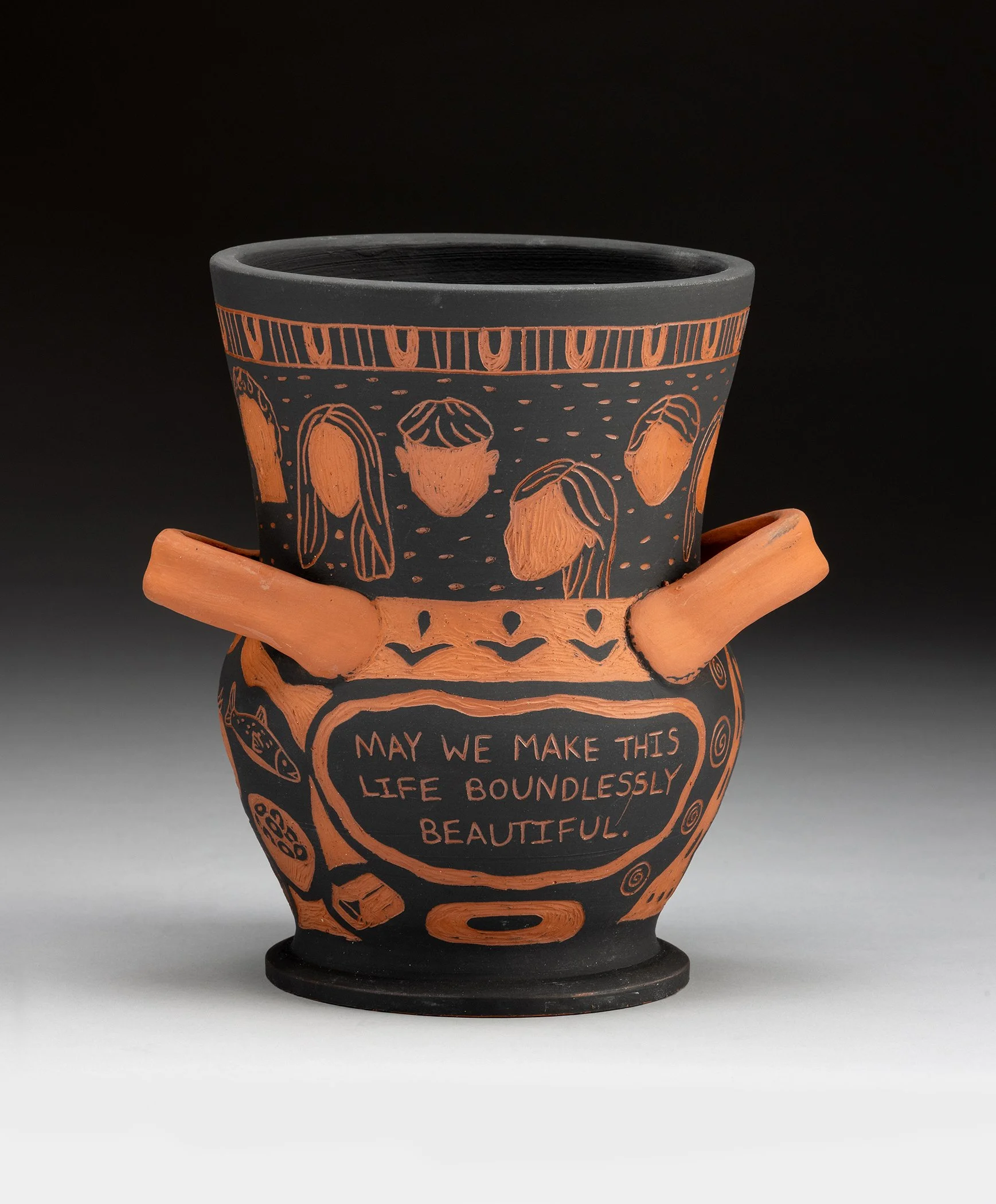
In the final vessel of the series, I reflect on the current generation of the Spivak family. This krater features portraits of my cousins and me, arranged chronologically by age: Anne, Katie, Sofia, Ruby, Bear, Sally, Ossian, Helen, Phineas, Reina, Tallulah, and Violet.
The piece serves as a dedicative vessel honoring those who came before us and our shared commitment to carrying their knowledge forward while striving to build upon it. One side of the vessel depicts foods from what we affectionately call “Jew Brunch” — the meals that bring our family together: bagels, smoked salmon, cream cheese, capers, pickles, tomato, and onion.
The inscriptions throughout the work combine writings by my cousin Anne and myself, weaving our voices into the larger narrative of family, memory, and inheritance.
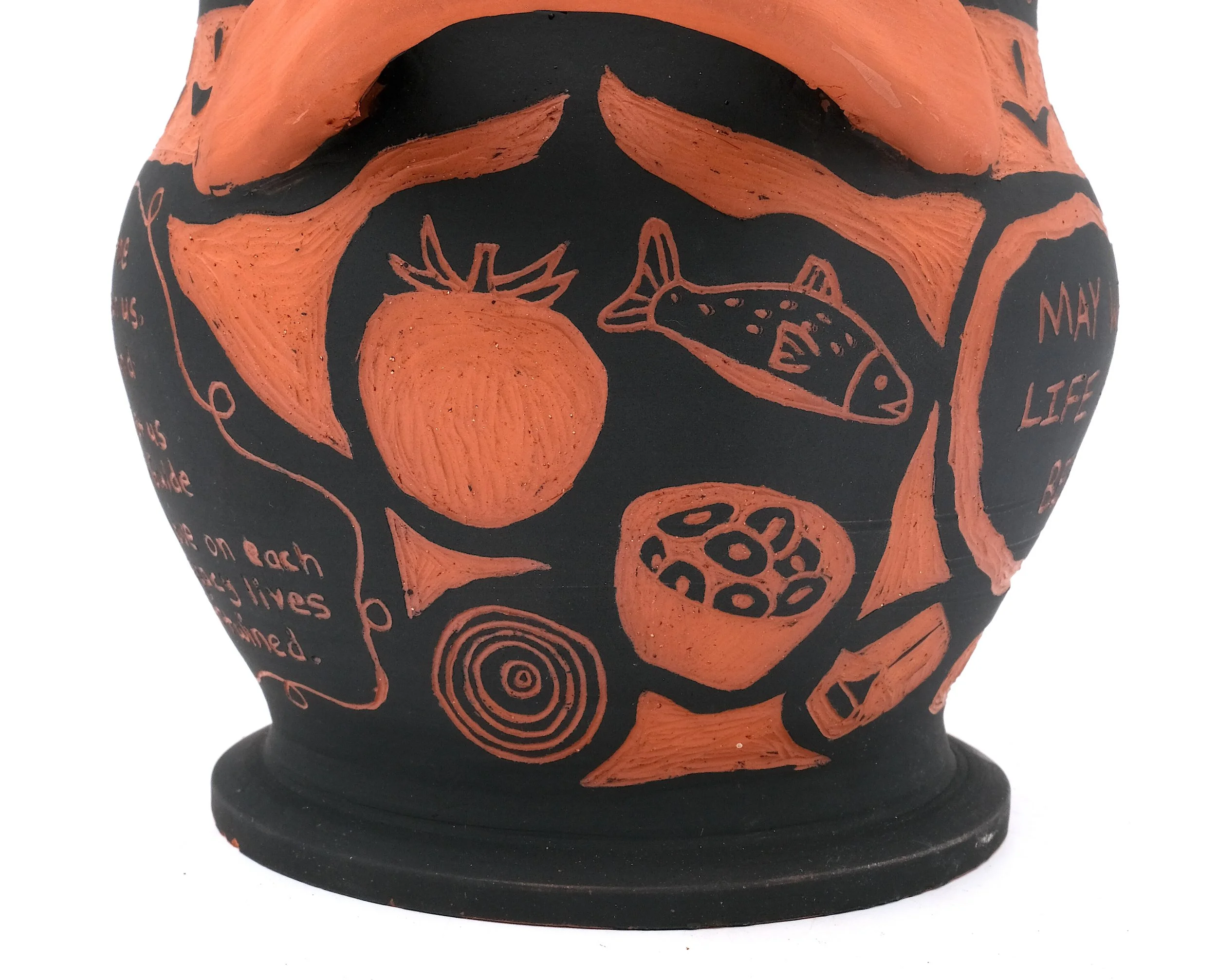
Excerpt on Part Five
“In eternal gratitude for the infinite gifts bestowed upon us. We delight in your energy and presence surrounding us. Let us listen and learn from you. Guide us towards more light and love on each of our unique paths. Your legacy lives on in us— destined souls intertwined.”
“May we make this life boundlessly beautiful”